

How a Student Visa Attorney Helps Strengthen Your Application

Arzoo Connor • December 18, 2025

How a Student Visa Attorney Helps Strengthen Your Application

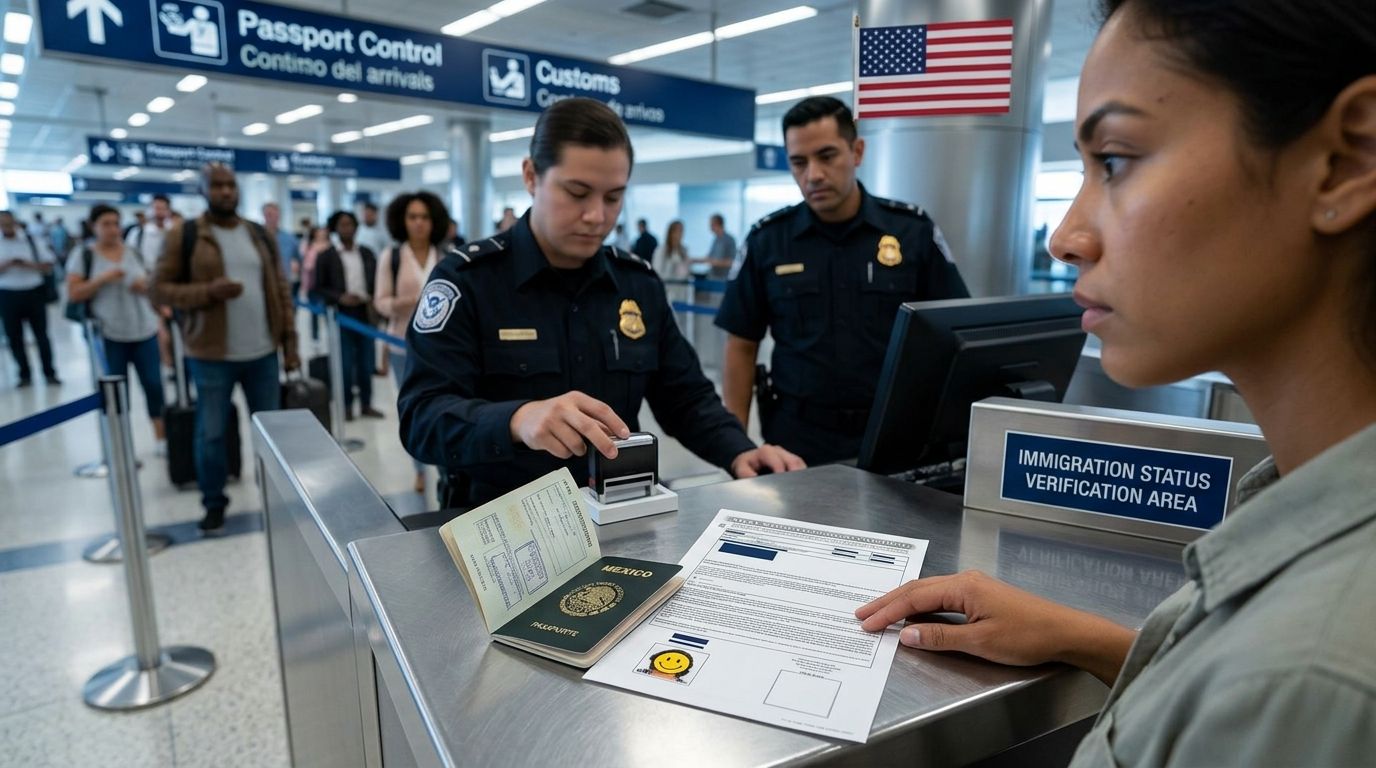
Studying in the United States opens doors to world-class education, cultural diversity, and countless opportunities for personal and professional growth. But before international students can begin that journey, they must secure one essential requirement: the F-1 student visa.


The U.S. immigration system is complex, and even strong applicants face challenges when preparing documentation, demonstrating financial support, or answering questions during a consular interview. This is where working with an experienced Student Visa Attorney makes a meaningful difference.

At ARC Legal Services, LLC, Attorney Arzoo Connor helps students and their families navigate each step of the visa process, making sure applications are complete, accurate, and compelling.


Why Your Student Visa Application Must Be Strong

U.S. immigration authorities evaluate student visa applicants carefully. Approval depends on demonstrating:


  • Admission to an accredited school
  • Sufficient financial support
  • Strong ties to your home country
  • Credible academic plans
  • Intent to follow U.S. immigration rules


Even small mistakes—missing documents, unclear financial records, or unprepared interview answers—can result in delays or denials. An attorney ensures your application meets every requirement clearly and confidently.


How a Student Visa Attorney Strengthens Your Case

1. Ensuring All Required Documents Are Complete and Accurate

Student visa applications involve multiple forms and steps, including:


  • Form I-20 from your school
  • Form DS-160 visa application
  • SEVIS fee payment
  • Passport requirements
  • Financial documentation
  • Academic records


Attorney Arzoo Connor reviews every part of your application to prevent errors that could delay or jeopardize approval.


2. Helping You Demonstrate Sufficient Financial Support

One of the most common reasons F-1 visas are denied is inadequate or unclear financial proof. Students must show they can cover:


  • Tuition
  • Housing
  • Food
  • Transportation
  • Healthcare
  • Other living expenses


ARC Legal Services helps you gather and present strong financial evidence, including:


  • Bank statements
  • Scholarship or sponsor letters
  • Affidavits of support
  • Proof of family resources
  • Education loans (if applicable)


A clear financial package significantly increases approval chances.


3. Preparing You for the Visa Interview

The consular interview is a critical step. Officers will ask questions about:


  • Your study plans
  • Choice of school
  • Long-term goals
  • Financial support
  • Intent to return home


Attorney Arzoo Connor provides interview preparation to help you:


  • Answer clearly and confidently
  • Address any red flags
  • Explain your academic goals
  • Demonstrate nonimmigrant intent
  • Avoid common missteps


Being prepared often makes the difference between approval and denial.


4. Identifying and Resolving Possible Issues Early

Some students have unique challenges, such as:


  • Previous visa denials
  • Gaps in studies
  • Inconsistent financial records
  • Concerns about ties to their home country
  • Change of status complications


Rather than being surprised at the interview, Attorney Connor helps you address these issues up front with proper documentation and explanations.


5. Guiding You Beyond the Visa—Maintaining Status in the U.S.

A strong application is just the beginning. After arriving in the U.S., students must maintain legal status by:


  • Enrolling full-time
  • Reporting changes to their DSO
  • Avoiding unauthorized work
  • Applying correctly for CPT or OPT
  • Extending or transferring their I-20 if needed


ARC Legal Services provides ongoing legal guidance so students stay compliant and avoid unintentional violations.


Why Work With ARC Legal Services, LLC?

Attorney Arzoo Connor offers:

  • Personalized guidance tailored to your situation
  • Thorough review of all forms and documents
  • Interview preparation to increase confidence
  • Clear explanations of rules and expectations
  • Support for future immigration goals, including OPT or change of status


Students who work with a knowledgeable immigration attorney typically submit stronger applications and experience fewer delays—and greater confidence.


Get Support With Your Student Visa Today

Your educational journey in the United States begins with a strong, well-prepared visa application. Let ARC Legal Services help you take the first step with clarity and confidence.
By Arzoo Connor May 20, 2026
Adding a child to your property deed in Texas to avoid probate sounds simple. It often costs families far more than probate ever would. A Texas estate planning attorney explains what actually happens and what to do instead.
By Arzoo Connor May 12, 2026
Green card holders can be placed in removal proceedings for certain criminal convictions. EOIR Form 42A cancellation of removal is one of the only options available, and the requirements are strict. Here is what you need to know.
By Arzoo Connor May 5, 2026
If a notario, paralegal, or family friend filed your immigration application and you got a letter from USCIS, here is what you need to know and what to do before the deadline passes.
By Arzoo Connor April 22, 2026
I want to tell you about a case that still sits with me. I am going to protect my client's identity because her safety matters more than any story I could tell. But I am sharing this because there are women out there right now in situations just like hers, and most of them believe no one can help them. I want them to know that is not true. Where Her Story Started She came to this country years ago, hoping for a better life. She had already been through more than most people face in a lifetime. Married at the young age of 15 in her home country, she had three children. Two of them have autism and require extra support every single day. The youngest was extremely close to his father, who passed away. After her husband died, she was devastated. She was raising three children alone, two of them with significant needs, and she was grieving deeply. It was in that vulnerable place that she met someone new. He presented himself as a support system. He pursued her. What she did not know was that he was manipulating her from the start. She became pregnant. They had a child together. And then, once that baby arrived, everything changed. He cheated on her. He became verbally and physically abusive. She tried to leave him. On the night she finally attempted to end the relationship, he called the police and told them a story that was not true. He presented himself as the victim. He was calm, articulate, and looked like a devoted father. She was the one who ended up being detained. Because she was not in the country lawfully, that night did not end with her going home to her children. It ended with her in immigration detention. What Nobody Told Her Here is something most people do not know, including many immigration attorneys. You do not have to be in the country legally to be protected under the Violence Against Women Act. VAWA exists specifically for situations like hers. It was designed to protect immigrant survivors of domestic violence, sexual assault, and abuse, including people who are undocumented, because Congress understood that abusers frequently use immigration status as a weapon. They threaten to call the police. They threaten deportation. They use their partner's fear of the system to keep them trapped. That is exactly what happened here. And it is why I took this case. What the Case Actually Looked Like I want to be honest about something. This was not a clean, simple case with months to prepare. I had two weeks. Two weeks to gather evidence, work through the domestic violence charges that had been filed against her the night she tried to leave, coordinate with a criminal attorney to have those charges addressed, locate witnesses, and build a full immigration trial case from scratch. Then I walked into that immigration courtroom and the judge gave me 60 minutes. 60 minutes to present an entire VAWA defense, put four witnesses on the stand, and ask a judge to release a mother back to her children. 60 minutes. I am not telling you this so you feel sorry for me. I am telling you this so you understand what these cases actually look like. The people who end up in this situation rarely have time on their side. The system does not slow down because the facts are complicated. You either show up ready or your client loses. What We Had to Prove A VAWA defense in immigration court requires showing several things. You have to establish that abuse occurred. You have to show that the person facing deportation was the victim, not the perpetrator. And you have to do all of this against someone who, in this case, had already successfully convinced law enforcement, prosecutors, and other attorneys that he was the one who had been wronged. He was good at it. I will give him that. My job was to show who she actually was. A mother. A woman who had already survived an enormous amount of loss before this man ever entered her picture. A person who had done nothing wrong except trust someone who exploited that trust at the worst possible moment in her life. We worked with a criminal attorney to address the charges that had been filed against her. Getting those handled was critical to building the immigration case. This is something I see all the time -- a criminal charge that looks minor on its face becomes the thing that closes every immigration door. You cannot ignore one side of a case and expect the other side to succeed. Then we built the VAWA case. Witness by witness. Document by document. All of it pulled together in two weeks. What Happened in That Courtroom I put four witnesses on in 60 minutes. I presented evidence of abuse. I told her story clearly and completely and I let the facts speak. The judge ruled in her favor. She went home to her children. I am not going to pretend that every case ends this way. They do not. I have lost cases that I believed in completely, and those losses follow you. But this one ended the way it should have ended, and I think about it when cases feel impossible. What I Want You to Take From This If you are a woman in an abusive situation and you are afraid that your immigration status means you have no options, please read this carefully. Your status does not disqualify you from protection. It does not mean you have to stay with someone who is hurting you to avoid deportation. It does not mean the courts will automatically side with a citizen or a person with papers over you. There are legal tools designed specifically for your situation. VAWA is one of them. The U-Visa is another. What determines whether you can use them is not your immigration status. It is the facts of what happened to you and whether you have an attorney who knows how to present them. What I would also say is this: if you are in an abusive relationship and your partner has ever threatened to call immigration on you, or has used your status to control you, that threat itself is evidence of abuse. Document it. Write it down. Tell someone you trust. And call an attorney before anything is filed. Before you accept any plea deal. Before you sign anything. The moment criminal charges or immigration proceedings begin, the clock starts moving, and in this world it moves fast. A Note on VAWA and the U-Visa People often ask me what the difference is between these two forms of relief. The short answer is this, VAWA is for survivors whose abuser is a U.S. citizen or lawful permanent resident, and the relationship must be a qualifying one -- spouse, parent, or child. It allows you to petition for immigration status on your own, without involving your abuser in the process at all. The U-Visa applies to a broader range of situations. It covers survivors of many types of crimes, not only domestic violence, and does not require the abuser to have any particular immigration status. It does require that you cooperated with law enforcement in some way during the investigation. In some cases, a person may qualify for both. In others, only one applies. The only way to know which path is right for your situation is to sit down with an attorney and go through the facts. If you are in a situation like the one I described above, please do not wait. For Attorneys Reading This If you are a criminal defense attorney with a noncitizen client, please do not finalize any plea without consulting an immigration attorney first. A disposition that looks clean on the criminal side can permanently close immigration doors. This happens constantly and it is almost always preventable. I work with criminal attorneys on cases like this regularly. Call me before you advise your client to accept anything. Attorney Arzoo Connor is the founder of ARC Legal Services in Fort Worth, Texas. She practices immigration law and estate planning and works with clients across the country. She is an immigrant herself and a veteran of the U.S. military. Her entire team has personally navigated the immigration process. ARC Legal Services: 469-200-0158 Consultations are $50. Same-day response is standard. If you or someone you know is experiencing domestic violence, the National Domestic Violence Hotline is available 24 hours a day at 1-800-799-7233 or thehotline.org.
By Arzoo Connor April 9, 2026
A practical guide to emergency preparedness from an immigration attorney who has been through the process herself
By Arzoo Connor April 7, 2026
Most families learn about Medicaid Asset Protection after it’s too late to use it. Attorney Arzoo Connor explains how a Medicaid Asset Protection Trust works and why timing is everything.
By Arzoo Connor March 19, 2026
immigration bond update March 2026, ICE detention bond hearing Texas, Maldonado Bautista Buenrostro-Mendez, Fort Worth immigration attorney, Fifth Circuit bond Texas Louisiana Mississippi, crossed without papers bond eligible, habeas corpus immigration detention 2026, ARC Legal Services
By Arzoo Connor March 4, 2026
I've had this conversation more times than I can count. Someone comes in, stressed, and walks me through their situation. They had a run-in with the law a couple of years back. Nothing major, they say. They hired a criminal attorney, took a plea deal, got the records expunged. Their attorney told them they were good. Their family told them they were good. They even found someone in a Facebook group who went through the same thing and came out fine. So they moved on. Until a green card application came up, or a renewal, or a petition for a family member. Now they're sitting across from me. And I have to tell them the thing nobody told them before: expungement means nothing in immigration court. The look is always the same. Disbelief, then the slow weight of what that actually means. Two Systems. Two Very Different Rules. Here's what a lot of people don't know, and honestly, what a lot of criminal attorneys don't fully think about either. The criminal justice system and the immigration system are separate. Completely. What fixes your record in one does not fix it in the other. When a criminal record gets expunged, the state is saying it didn't happen. You can say no on job applications. It won't show on most background checks. That matters and it's a real relief. But immigration law runs on federal rules. And under those rules, that arrest, that plea, that conviction it still happened. USCIS can see it. An immigration judge can weigh it. Depending on the charge, it can affect a visa application, a green card, even whether someone ends up in removal proceedings. It is not a technicality. It is just how these two systems work. And not knowing it can cost someone everything. The Case I Keep Thinking About I'll walk you through a real situation. Details are changed, but the facts are ones I see all the time. A client came to me after being arrested a few years earlier for possession of a weapon. Not a U.S. citizen. His criminal attorney was good, got him a plea deal, record got expunged. Case closed. Nobody brought in an immigration attorney because from the criminal side, there was nothing left to do. Then he went to apply for his green card. That charge came up. And because of how immigration law handles weapons offenses, it created a real problem. One that would have been a lot easier to deal with, maybe even avoidable, if I had been in the room before he signed that plea. This is something I want people to hear: I work with criminal attorneys regularly . When I get involved before a plea is entered, we can sometimes push for a lower charge, or frame the plea in a way that does less damage on the immigration side. Not every time. But enough times that it matters. And that difference is someone staying here with their kids or not. Once the plea is signed, the options get a lot harder. You work with what's there. Why This Keeps Happening I'm not blaming criminal attorneys. Most of them are good at their job. But immigration law moves fast, the rules keep changing, and it is hard to track unless it is all you do. They are focused on the criminal case. That is what they should be focused on. The problem is nobody thinks to ask. When you're scared and just arrested, you call a criminal attorney. That is the right move. But if you are not a U.S. citizen, you need to tell that attorney immediately. And a good criminal attorney, when they hear that, should call someone like me before advising you on any deal. Then there is social media. I cannot tell you how many people come in after reading a post from someone who swears their expungement cleared everything for immigration too. Maybe that person's charge was different. Maybe their status was different. Maybe they just got lucky and don't know it yet. Immigration cases are not the same. What worked for one person can absolutely wreck another. What to Do If This Sounds Familiar If you are not a U.S. citizen and you have a criminal record, even something minor, even something expunged, even something dismissed, talk to an immigration attorney before you file anything. Don't assume it was taken care of. Find out for sure. If you are dealing with criminal charges right now, tell your criminal attorney you have immigration concerns. Ask them to get on the phone with an immigration attorney before you accept any deal. Any attorney who takes their job seriously will do that without hesitation. And if someone in a group chat or a comment thread told you your expungement fixed your immigration situation, please don't treat that as legal advice. Come in and let us actually look at your case. One Conversation Can Change a Lot I do this work because it is personal to me. My family came here in 1996. I became a citizen in the middle of my first year of law school. Everyone in my office has been through their own version of this process. We know what is actually at stake for the people who sit across from us. My consultations run 45 minutes to 1 hour. I go through every option, what it costs, what the timeline looks like, what the risks are. If I can't help you, I will tell you straight and explain why. I turn people away regularly. But at least they leave knowing exactly where they stand. It costs $50 to come in. If you have a criminal matter in your past and an immigration case anywhere in your future, that is a conversation worth having now , not when something has already gone wrong. Ready to talk? Call ARC Legal Services (469) 200-0158 or reach out online. We respond the same day.
Last Will and Testament document with gavel, eyeglasses, and a wax seal.
By Arzoo Connor February 12, 2026
Learn what happens if you die without a will in Texas and how intestate laws affect your family. ARC Legal Services, LLC helps local residents protect loved ones.
Person signing legal documents at a desk, gavel nearby.
By Arzoo Connor January 15, 2026
Discover why Powers of Attorney are essential to a complete estate plan. Learn how a healthcare and financial POA protects your future and ensures your wishes are honored. Get guidance from ARC Legal Services, LLC in Fort Worth, Texas.