


Why Green Card Holders Need an Estate Plan Before They Become US Citizens
Green card holders face different estate tax rules than US citizens, and the gap between what a citizen's family pays and what a noncitizen's family pays can be significant.
A planning tool called a Qualified Domestic Trust, or QDOT, is specifically designed to address this situation, but it has to be in place before it is needed. Once someone dies, the window to plan is closed.
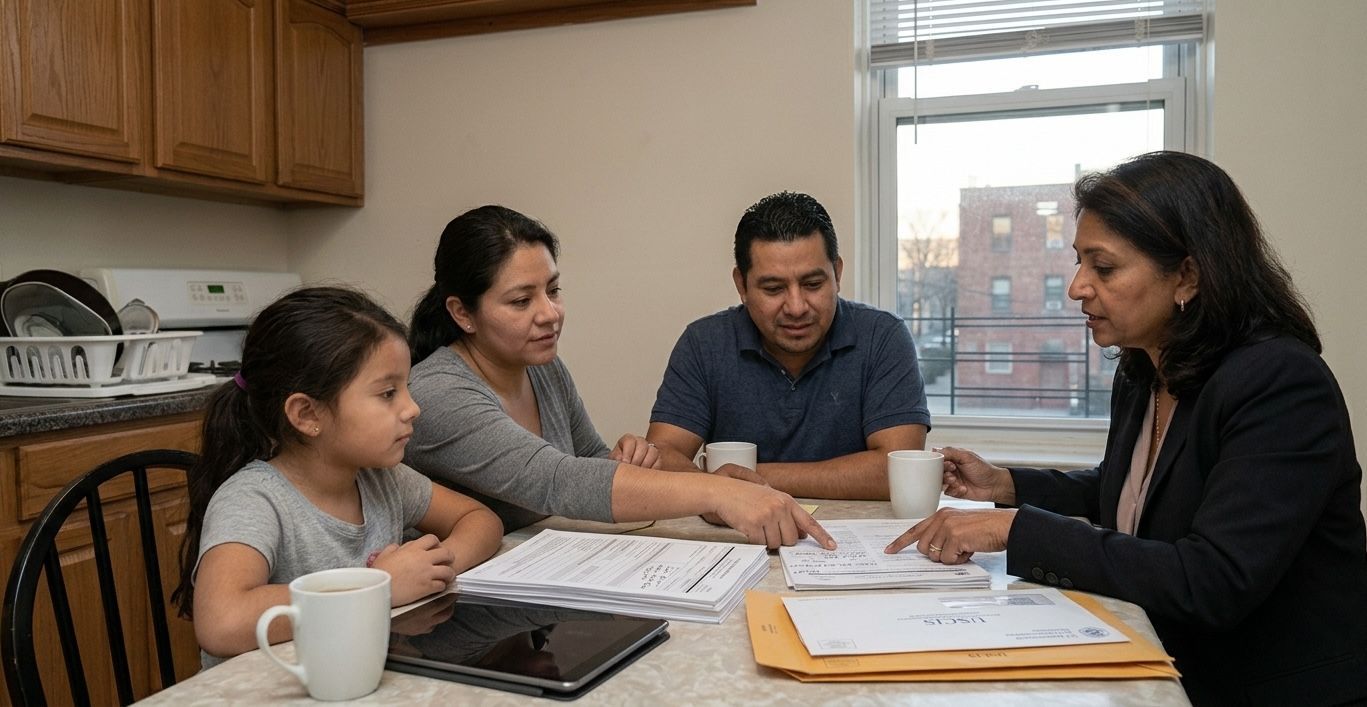
I practice both immigration law and estate planning in Texas, which means I regularly see the intersection of these two subjects in ways that most attorneys who practice only one of them do not. This post is for green card holders who have not thought about estate planning yet and for US citizens who have a green card holder spouse.
The estate tax difference between citizens and green card holders
The United States imposes an estate tax on the transfer of assets at death above a certain exemption amount. For US citizens, the federal estate tax exemption in 2026 is substantial, meaning most estates below a very high threshold pass without federal estate tax. When a US citizen dies and leaves assets to a US citizen spouse, the unlimited marital deduction applies, meaning those assets can pass to the surviving citizen spouse entirely free of estate tax regardless of amount.
When a US citizen dies and leaves assets to a surviving spouse who is not a US citizen, even a lawful permanent resident with a green card, the unlimited marital deduction does not automatically apply in the same way. The IRS treats a noncitizen spouse differently because there is a concern that the assets could leave the US tax system if the surviving spouse later moves to another country. The result is that an estate that would have passed tax-free to a citizen spouse may face estate tax when it passes to a green card holder spouse.
What a Qualified Domestic Trust is and why it matters
A Qualified Domestic Trust, or QDOT, is an estate planning structure that allows assets to pass to a noncitizen surviving spouse while deferring the estate tax that would otherwise apply. The QDOT holds the assets and pays income to the surviving spouse during their lifetime. The estate tax is deferred until assets are distributed from the trust or until the surviving spouse dies. If the surviving spouse later becomes a US citizen, the QDOT can be dissolved and the deferred tax goes away.
The QDOT has to be established in the estate plan before death. It cannot be created retroactively after someone dies. A will that is drafted without this consideration and leaves everything outright to a noncitizen spouse does not create a QDOT. The surviving spouse would then face the estate tax without the benefit of the deferral structure.
Why the window between green card and citizenship is specifically important
Many green card holders plan to naturalize eventually. Some are in the process. Some are waiting until they meet the time requirements. During that period, they are still noncitizens for estate tax purposes, and if their US citizen spouse dies without proper planning in place, the estate tax consequences apply.
The reason I emphasize this specifically for the period before naturalization is that people in this situation often assume their immigration status will resolve before they need to think about estate planning. The assumption is that they will become citizens, the issue will go away, and they can plan at that point. But naturalization takes time, the timeline is not always predictable, and people die at all ages. Planning should happen now, not after a milestone that has not yet occurred.
This is not just about very large estates
People often assume estate tax planning is only relevant for the very wealthy. For couples where one spouse is a US citizen and one is a green card holder, this planning matters at asset levels that many people do not think of as especially large. If you and your spouse own a home in the DFW area, have retirement accounts, have life insurance, and have savings, the combined value of those assets can be meaningful and the tax consequences of dying without proper planning can affect your family in concrete ways.
Other estate planning considerations specific to green card holders
Beyond the estate tax question, green card holders and their families often have other planning needs that a standard estate planning framework does not fully address. If you have property or family members in another country, your plan needs to address how those assets are handled and what happens if a beneficiary cannot easily receive assets in the United States. If your children are at different stages of the naturalization process, your plan needs to account for their different statuses. If you have a mixed-status family, the planning considerations multiply.
These are exactly the situations where having an attorney who understands both immigration law and estate planning is useful. The documents that a standard estate planning attorney drafts may not account for the immigration dimensions of your family's situation.
If you are a green card holder in Texas, or if you have a green card holder spouse, a consultation will tell you exactly what your situation calls for and what it costs to put it in place. Call us.
Attorney Arzoo Connor
ARC Legal Services | Fort Worth, TX | Hablamos Español
469-200-0158 | www.arclawoffice.com
This post is for general informational purposes only and is not legal advice. Immigration law is complex and every case is different. Please consult a qualified attorney about your individual situation.