



If You Are Eligible for a Green Card Through Adjustment of Status, File Before September
If you are eligible to apply for a green card through adjustment of status and you have been waiting, stop waiting. File before September. Here is what changed and why timing matters right now.
The Trump administration rescinded a Biden-era regulation that had defined what public charge means for immigration purposes. That regulation gave everyone a clear framework — which benefits counted, how much weight they carried, what officers could and could not consider. It is gone now. USCIS will issue new guidance eventually, but that guidance has not come out yet. Nobody knows what it will say or when it will arrive.
Applications filed now get evaluated under the standard that exists today.
Applications filed after new guidance issues get evaluated under whatever comes next, if you are eligible to file before September do so.
What public charge actually means
Public charge is a ground of inadmissibility. It means an immigration officer can deny your green card application if they determine you are likely to become primarily dependent on the government for your support. It has been part of immigration law for a long time and it is one of the most misunderstood parts of the process.
It is not a checklist. It is not one program automatically disqualifying you. Officers are supposed to look at the totality of your circumstances — your age, your health, your work history, your education, your income, your assets, your household size, and whether you have received certain government benefits. One of those factors by itself does not decide the case.
What benefits could actually come up
This is the question I get asked most often right now, so let me be specific.
Cash assistance programs like SSI and TANF — Supplemental Security Income and Temporary Assistance for Needy Families — are the benefits that have historically carried the most weight in a public charge analysis. If you are receiving cash assistance directly, that is the scenario most likely to raise a flag.
Long-term institutional care paid for by the government, like a nursing facility or long-term psychiatric hospitalization, also falls squarely into the analysis.
Medicaid for adults has been the more contested question. Under the 2019 rule that the previous administration put in place, non-emergency Medicaid for adults over 21 was specifically listed as a heavily weighted negative factor. That rule was rescinded under Biden. Whether the new guidance will look like 2019 again is exactly what nobody knows right now.
SNAP, which most people call food stamps, was also listed as a heavily weighted factor under the 2019 rule. Same uncertainty applies.
CHIP — the Children's Health Insurance Program — is for children. I will address this specifically below because it is one of the most common questions I get from my clients.
Programs that have generally not been counted in the public charge analysis include Medicaid for pregnant women, Medicaid for children, emergency Medicaid, school-based benefits, the WIC nutrition program, and most housing assistance. But again, the standard is in flux and the honest answer is that the specifics may shift with new guidance.
Does it matter whether it is the applicant, the sponsor, or the petitioner receiving benefits
This is the question that matters most to a lot of families and the answer is not one-size-fits-all.
The public charge analysis focuses on the applicant. The person applying for the green card. Officers are looking at whether that specific person is likely to become dependent on the government. Benefits received by the applicant are what go into that analysis directly.
The sponsor — the person who files the Affidavit of Support, which is Form I-864 — is not the applicant, but their financial picture matters in a different way. The Affidavit of Support is legally binding. The sponsor is agreeing to maintain the applicant at 125% of the federal poverty guidelines. If a sponsor's income does not meet that threshold or they themselves rely heavily on government assistance, that weakens the overall application because the financial support picture looks uncertain.
The petitioner — the person who filed the I-130 or the underlying immigrant visa petition — is often the same person as the sponsor but not always. Their role in the public charge analysis is tied to whether they are also the one filing the Affidavit of Support.
Now the question I hear constantly from parents in this situation: my US citizen children are on Medicaid or CHIP. Does that hurt my application?
Under the framework that has existed in recent years, benefits received by US citizen family members — including children — are not attributed to the applicant in the public charge analysis. Your child being on CHIP is not supposed to count against you. The analysis is supposed to focus on the applicant, not the household broadly.
That said, the direction of current policy is toward broader scrutiny. The honest advice I give my clients is this: if your children are on CHIP or Medicaid and you are about to file an adjustment of status application, that fact should be part of the conversation with your attorney before you file. Not because it automatically disqualifies you, but because your attorney needs to know the full picture to present your case correctly and to anticipate what questions may come up in an interview.
What to do right now
If you are eligible to file and you have been waiting, file. The uncertainty is real and filing now is better than filing into an unknown standard.
If you are not sure whether public charge even applies to your situation, it does not apply the same way to everyone. People filing through certain family categories, VAWA self-petitioners, asylum applicants, T visa recipients, and others may be exempt from the public charge ground entirely or subject to a different standard. That is the first question your attorney should answer.
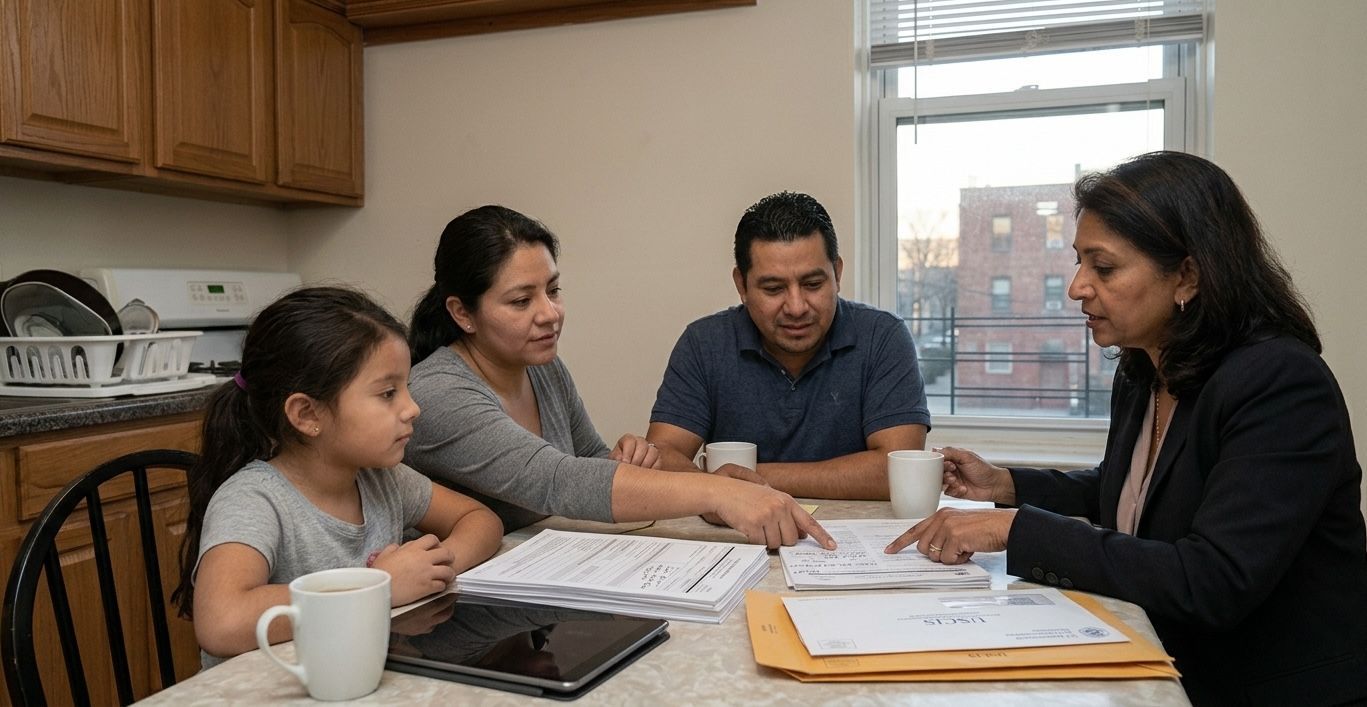
Do not make decisions about this based on what you heard from a friend or read online. The details of your case — your income, your work history, which benefits you or your family members receive, who your sponsor is and what their finances look like — all of it matters. This is a call-an-attorney situation.
We handle adjustment of status cases in Texas and nation-wide. Call us.
Attorney Arzoo Connor ARC Legal Services | Fort Worth, TX | Hablamos Español 469-200-0158 | arclawoffice.com
This post is for general informational purposes only and is not legal advice. Every immigration case is different. Please consult a qualified attorney about your individual situation before making any decisions.