

What You Post on Social Media Can Be Used Against Your Immigration Case. USCIS Is Using AI to Look.

Arzoo Connor • September 24, 2026

USCIS is using artificial intelligence to screen social media accounts as part of immigration case review

CBP officers at airports and ports of entry are looking at phones and social media profiles. What you post, what you are tagged in, who you are photographed with, and what your accounts say about your relationships and your life can all be used as evidence in your immigration case — or against it.


I had a client whose visa application was flagged because a photo on their social media showed what an AI tool identified as a gang sign. It was a peace sign. That case had to be explained and documented at length. It cost time and money and stress that was entirely preventable. The system is not always accurate and the consequences of its errors fall on the applicant.


This is one of the most underappreciated risks in immigration law right now. I want to explain what is happening, what it means for different types of cases, and what you should do about your accounts today.


What USCIS and CBP are actually doing

USCIS has been conducting social media screening since approximately 2019. The program has expanded significantly and now uses AI tools to scan publicly available social media content for information relevant to immigration applications. Officers are looking for inconsistencies between what an applicant stated on their application and what their social media suggests about their life, relationships, criminal associations, national security concerns, and fraud indicators.


CBP — Customs and Border Protection — has separate authority at ports of entry, including international airports. They can ask to see your phone. They can ask for your social media handles. In some cases they have demanded passwords, though the legal authority for that remains contested. The AI screening expands the government's capacity to review accounts at a scale that human officers could not manage alone.


What this means practically is that content you posted years ago, content you were tagged in by someone else, and content that is technically public even if you think of your account as private are all potentially in scope for review.


What they are looking for

The most common issues I see flagged are relationship inconsistencies in marriage-based cases, gang or criminal association indicators, and statements or content that contradict something on an application.


In marriage-based green card cases, your social media is essentially evidence about your relationship. Officers look at whether your accounts show a shared life. Are you and your spouse tagged together in photos? Do your posts reflect the relationship timeline you described on your application? Is your spouse labeled as your spouse on your accounts? Is your relationship history on Facebook accurate and consistent with what you submitted? If you claimed you married in 2022 but your Facebook shows a relationship status change in 2021 or 2023, that inconsistency gets flagged and has to be explained.


Gang affiliation — or anything that could be interpreted as gang affiliation — is another area where AI screening has produced false positives. Hand gestures in photos, tattoos, neighborhood associations, people standing in the background of images, phrases in captions that have dual meanings in different contexts. The AI does not have context. It identifies patterns and flags them. A human then reviews the flag, but the flag creates a problem that has to be resolved before your case can move forward.


Statements that contradict your application also come up regularly. Claiming you have never been affiliated with a certain organization and then having photos from that organization's events on your account. A post about traveling to a country you said you had not visited. A check-in at a location that contradicts your stated residence. A comment that suggests a relationship you did not disclose. These inconsistencies are exactly what the AI screening is designed to surface.


What to do about your accounts right now

If you have a pending immigration application or you are planning to file one, go through your social media accounts before you submit anything.


Make your accounts private. This does not prevent CBP from requesting access at a port of entry, but it limits what AI tools can scrape from public searches and reduces the surface area of what can be reviewed without direct access to your device.


Label your spouse correctly on every platform. If you are married and filing a marriage-based green card, your Facebook relationship status, your Instagram bio, and how you tag your spouse in posts are all part of the evidence. They should consistently reflect reality.


Review photos you are tagged in by other people. You cannot control what others post, but you can remove tags from photos that could be misread — hand gestures, events, people in the background whose associations you cannot account for. If a photo could be misinterpreted out of context, removing your tag removes it from your public profile.

Do not delete everything at once. Bulk deletion of content right before an immigration application or interview can itself raise questions about what you were removing and why. Selective, thoughtful review is better than a mass deletion that leaves an obvious gap in your account history.


Be careful about who you are connected to publicly. Associations in your friends list, in your comments, in your tags — connections with people who have criminal histories or gang affiliations can be flagged even if you personally have nothing to do with their activities.


Do not post about your immigration case. No updates about applications, hearings, approvals, or denials. No comments about your status. No content that gives context about your case that you have not already disclosed on your application. What you say publicly about your own case can be used at your interview.


For marriage-based green card cases specifically

Your social media is part of your case file in the eyes of an immigration officer. It should tell the same story as your application. Before your green card interview, review both your application and your social media to make sure they are consistent. An officer can and does look at accounts.


I have seen cases where officers brought printed screenshots from a client's social media to the green card interview. Not necessarily to catch anyone in a lie — just as part of the review process. If what they printed matches what you said on your application, the interview moves forward normally. If it does not, you are explaining an inconsistency across a table from an officer with the power to deny your case.


The bottom line

Social media is not private in immigration proceedings. Treat every post, photo, tag, and connection as potentially visible to an immigration officer. That is not paranoia — that is the current reality of how these cases are reviewed.


If you have concerns about your social media and a pending immigration case, or if something on your accounts could be misread and you are not sure how to handle it, call us before your interview or before you file. A consultation can walk through what needs to be addressed.


Attorney Arzoo Connor

ARC Legal Services | Fort Worth, TX | Hablamos Español

469-200-0158 | arclawoffice.com


This post is for general informational purposes only and is not legal advice. Every immigration case is different. Please consult a qualified attorney about your individual situation.
By Arzoo Connor • September 24, 2026
Airports in the United States are federal jurisdiction.
By Arzoo Connor • September 15, 2026
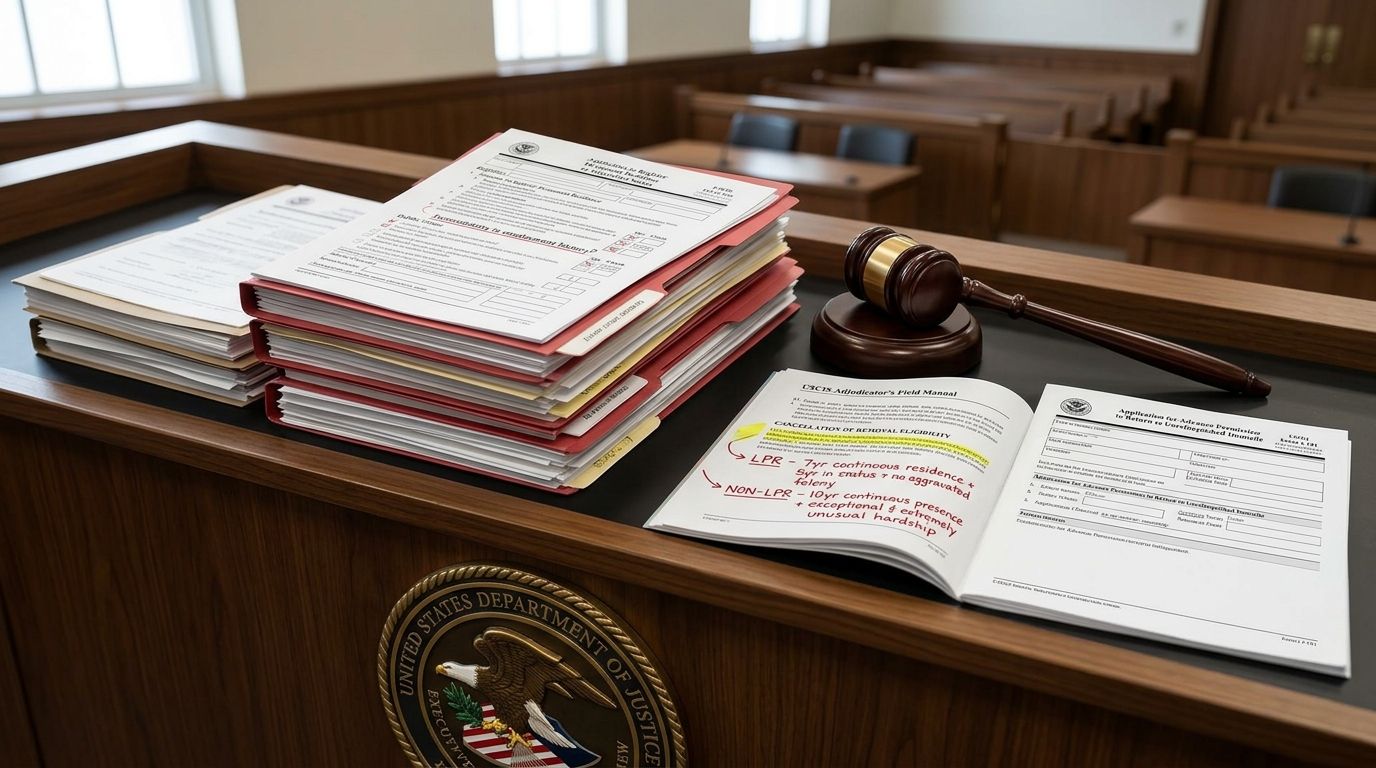
Cancellation of removal is a form of relief in immigration court that allows certain people who are in removal proceedings to avoid deportation and, in some cases, receive a green card.
By Arzoo Connor • September 9, 2026
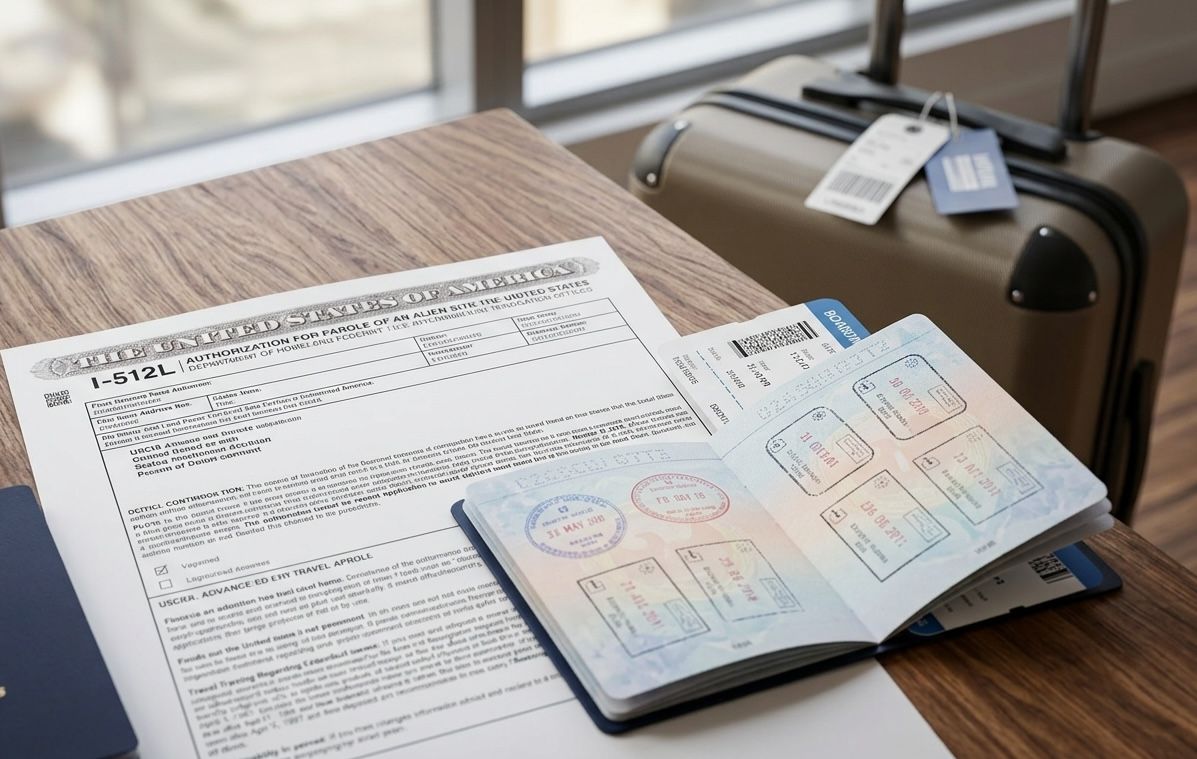
Advance parole is a travel document that allows certain noncitizens with pending adjustment of status applications to leave and reenter the United States without abandoning their case.
By Arzoo Connor • August 31, 2026
At adjustment of status interviews in 2026, USCIS officers are asking more detailed and more pointed questions than they were two years ago.
By Arzoo Connor • August 28, 2026
If you are eligible to apply for a green card through adjustment of status and you have been waiting, stop waiting. File before September. Here is what changed and why timing matters right now.
By Arzoo Connor • August 28, 2026
If you had a removal order or an administratively closed immigration court case and later received a green card, that court case is still an obstacle
By Arzoo Connor • August 1, 2026
Green card holders face different estate tax rules than US citizens, and the gap between what a citizen's family pays and what a noncitizen's family pays can be significant.
By Arzoo Connor • July 30, 2026
I-130 family petitions are currently taking close to two years to be approved by USCIS.
By Arzoo Connor • July 27, 2026
If you miss your immigration court hearing, the judge will almost certainly issue an in absentia order of removal. That means you are ordered deported without being present, without being heard, and often without knowing it happened until ICE comes to your door or you try to travel and find out at the border. This is one of the most common ways people lose cases that could have gone differently. I see it in Dallas immigration court regularly. Someone got a notice to appear, life got in the way, they thought they could reschedule, or they never received the notice at all because it went to an old address. The hearing happened without them. The order was issued. Now they are asking me what can be done. What an in absentia removal order means for your case An in absentia removal order is a formal order of deportation entered by an immigration judge when a respondent fails to appear. Once it is issued, you are subject to removal from the United States. If you have any pending applications or relief that you had not yet presented to the court, those matters are not automatically preserved. The order treats your failure to appear as a waiver of your right to be heard. The order also creates a ten-year bar on most forms of discretionary relief and makes it significantly harder to reopen your case, though not impossible in every situation. Can an in absentia order be reopened? Yes, in certain circumstances. You can file a motion to reopen an in absentia removal order if you can demonstrate that you did not receive proper notice of the hearing, or if you can show that exceptional circumstances caused your failure to appear. Exceptional circumstances under immigration law means something serious and beyond your control, not a scheduling conflict or a misunderstanding about the date. In immigration courts right now, judges are scrutinizing motions to reopen carefully. The standard for what qualifies as exceptional circumstances is applied strictly. A credible showing that notice was not properly received carries more weight than an argument that you forgot or were confused about the date. There are also deadlines. A motion to reopen based on lack of notice must generally be filed within a reasonable time. A motion based on exceptional circumstances must be filed within 180 days of the order. These deadlines matter and missing them closes additional doors. What if you never received notice of the hearing? Notice issues are more common than people realize. If the address on file with the immigration court was incorrect, if the notice was sent to an old address you had not updated, or if there is a documented problem with the notice that was sent, you may have grounds to reopen the case. Courts do look at whether notice was properly given before holding someone responsible for failing to appear. If you received a notice to appear that listed a time or date as TBD or to be determined, there is ongoing litigation about whether a subsequent notice sent to the address on file constitutes proper notice. This area of law has shifted in recent years and it is worth discussing with an attorney who practices in your specific immigration court. What to do right now if you have a missed hearing If you missed a hearing and you know an order may have been entered, do not wait to find out. Contact an immigration attorney as soon as possible. The sooner you act, the more options exist. Every day that passes after an in absentia order closes windows that may not reopen. If you are not sure whether an order was entered, you can check the status of your case on the EOIR website using your alien registration number. Your attorney can also pull the case record and determine what happened and when. If you have a hearing coming up and you are afraid to go, I understand that fear. But not going is almost always the worst outcome. An immigration judge who sees you show up, present your case, and engage with the process has the ability to exercise discretion. A judge who sees an empty chair does not.  If you have a missed hearing or an upcoming court date you are not sure how to handle, call us. Attorney Arzoo Connor ARC Legal Services | Fort Worth, TX | Hablamos Español 469-200-0158 | www.arclawoffice.com This post is for general informational purposes only and is not legal advice. Immigration law is complex and every case is different. Please consult a qualified attorney about your individual situation.
By Arzoo Connor • July 14, 2026
If a parent is detained or deported in Texas, the documents that protect your family are a financial power of attorney, a medical power of attorney, and a legal designation covering your minor children. Without these in place, the people who want to help your family may have no legal authority to do so, even if they are immediate family members. I practice immigration law and estate planning. I see both sides of what happens when a parent is detained without warning. The immigration side is what people call me for. The other side is the part nobody plans for. Who pays rent? Who can access the bank account? Who has legal standing to pick the children up from school, consent to a medical procedure, or make decisions when you cannot? Courts can eventually resolve all of these things. But court proceedings take time and money, and in the middle of a family crisis that is exactly the wrong moment to start a legal process to establish basic authority over your own household. What a financial power of attorney does for an immigrant family A financial power of attorney authorizes a person you trust to manage your accounts, pay your bills, handle your property, and make financial decisions if you are unavailable. If you are detained, someone still needs to pay rent. Someone still needs to handle your car payment. Someone still needs money for your children's food, school supplies, and medical appointments. Without this document, the people who love you and want to help have no legal standing to touch any of it, no matter how close they are to you. In Texas, a durable power of attorney remains in effect even if you are incapacitated or unavailable, which is exactly what you need for a detention scenario. A regular power of attorney can lapse. A durable one does not. This distinction matters and it is the version you want. What a medical power of attorney covers A medical power of attorney authorizes someone to make healthcare decisions for you if you cannot make them yourself. If you are detained and a medical situation arises, this document determines who speaks for you and what decisions they can make. Without it, healthcare providers are limited in what information they can share and what decisions family members can authorize, even in an emergency. The documents that protect your children specifically For parents, Texas law provides two additional tools that matter most in an enforcement scenario. The first is a designation of guardian for minor children, which is your written statement of who should care for your children if you are unable to do so. The second is what Texas calls an authorization agreement for nonparent relative care, which gives a relative or trusted adult specific legal authority to enroll your children in school, consent to their medical care, and make day-to-day decisions without going to court. Schools require documentation. Hospitals require documentation. An aunt or grandmother saying the parent is detained is not enough without legal paperwork behind it. I have seen families where children missed weeks of school and medical appointments because the adults who wanted to help could not get past the front desk of the school or the admissions desk at the clinic without documentation the family did not have. What I have seen happen without a plan I have seen families get through the immigration part of a crisis and then face months of chaos on the other side. The parent got through detention. The underlying immigration situation stabilized. And they came back to a family that had lost a vehicle to repossession, fallen behind on rent, missed medical appointments for children with ongoing conditions, and had a landlord who had started eviction proceedings because nobody had authority to handle the finances. The immigration case was the part they had thought about. The rest caught them completely off guard. A simple packet of documents, prepared ahead of time with an attorney, prevents all of that. Who to name and what they need to know Name someone stable. Someone nearby. Someone without legal complications of their own that might limit their ability to act. Name an alternate in case your first choice is unavailable. And before anything happens, have a real conversation with the person you are naming so they know where to find the documents and what to do with them.  Put together a written letter with the names and phone numbers of your attorney, your children's school, your doctor, your landlord, and the location of your important documents including your passport, immigration paperwork, lease, and bank account information. Give a copy to the person you trust. Keep a copy somewhere accessible. This is not a legal document but it is the thing that holds everything else together when someone is trying to help you under pressure. A note on why immigrant families in Texas specifically need this Every family should have these documents. For immigrant families in Fort Worth and the DFW area in 2026, the urgency is higher because the consequences of not having them are more immediate. This is not about assuming the worst. Not planning does not prevent something from happening. It only guarantees that if it does happen, your family is less protected than they could have been. I handle both immigration and estate planning at this office, which means I understand your full situation. If you have been putting this off, stop putting it off. Attorney Arzoo Connor ARC Legal Services | Fort Worth, TX | Hablamos Español 469-200-0158 | www.arclawoffice.com This post is for general informational purposes only and is not legal advice. Immigration law is complex and every case is different. Please consult a qualified attorney about your individual situation.