

What Documents Your Family Needs Before a Parent Is Detained or DeportedWhat Documents Your Family Needs Before a Parent Is Detained or Deported

Arzoo Connor • July 14, 2026

If a parent is detained or deported in Texas, the documents that protect your family are a financial power of attorney, a medical power of attorney, and a legal designation covering your minor children.


Without these in place, the people who want to help your family may have no legal authority to do so, even if they are immediate family members.


I practice immigration law and estate planning. I see both sides of what happens when a parent is detained without warning. The immigration side is what people call me for. The other side is the part nobody plans for. Who pays rent? Who can access the bank account? Who has legal standing to pick the children up from school, consent to a medical procedure, or make decisions when you cannot?


Courts can eventually resolve all of these things. But court proceedings take time and money, and in the middle of a family crisis that is exactly the wrong moment to start a legal process to establish basic authority over your own household.


What a financial power of attorney does for an immigrant family

A financial power of attorney authorizes a person you trust to manage your accounts, pay your bills, handle your property, and make financial decisions if you are unavailable. If you are detained, someone still needs to pay rent. Someone still needs to handle your car payment. Someone still needs money for your children's food, school supplies, and medical appointments. Without this document, the people who love you and want to help have no legal standing to touch any of it, no matter how close they are to you.


In Texas, a durable power of attorney remains in effect even if you are incapacitated or unavailable, which is exactly what you need for a detention scenario. A regular power of attorney can lapse. A durable one does not. This distinction matters and it is the version you want.


What a medical power of attorney covers

A medical power of attorney authorizes someone to make healthcare decisions for you if you cannot make them yourself. If you are detained and a medical situation arises, this document determines who speaks for you and what decisions they can make. Without it, healthcare providers are limited in what information they can share and what decisions family members can authorize, even in an emergency.


The documents that protect your children specifically

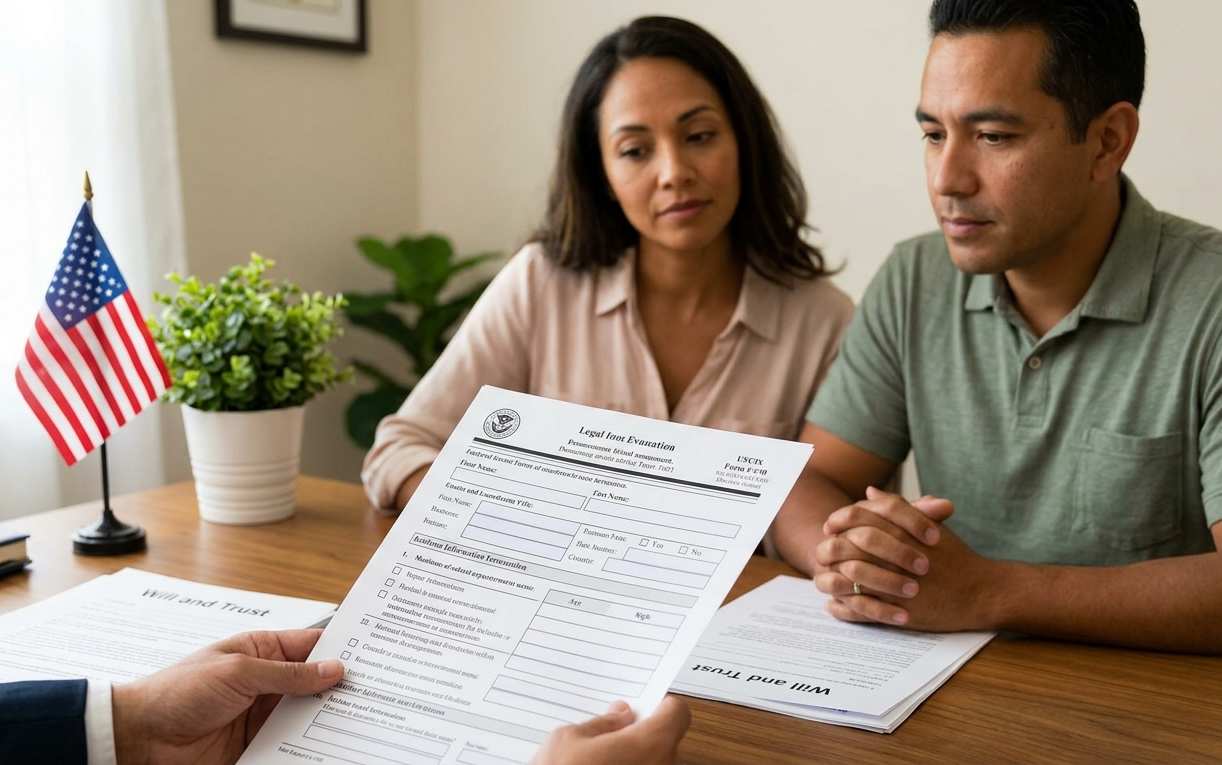
For parents, Texas law provides two additional tools that matter most in an enforcement scenario. The first is a designation of guardian for minor children, which is your written statement of who should care for your children if you are unable to do so. The second is what Texas calls an authorization agreement for nonparent relative care, which gives a relative or trusted adult specific legal authority to enroll your children in school, consent to their medical care, and make day-to-day decisions without going to court.


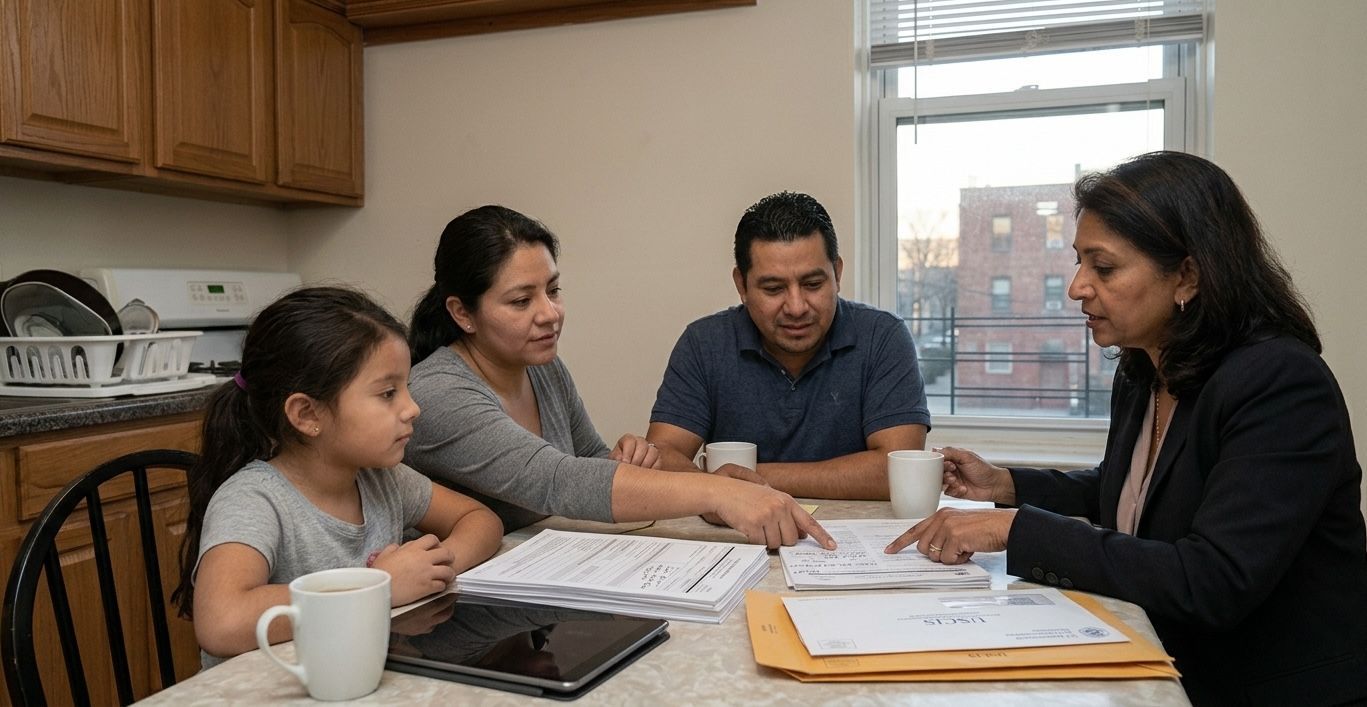
Schools require documentation. Hospitals require documentation. An aunt or grandmother saying the parent is detained is not enough without legal paperwork behind it. I have seen families where children missed weeks of school and medical appointments because the adults who wanted to help could not get past the front desk of the school or the admissions desk at the clinic without documentation the family did not have.


What I have seen happen without a plan

I have seen families get through the immigration part of a crisis and then face months of chaos on the other side. The parent got through detention. The underlying immigration situation stabilized. And they came back to a family that had lost a vehicle to repossession, fallen behind on rent, missed medical appointments for children with ongoing conditions, and had a landlord who had started eviction proceedings because nobody had authority to handle the finances. The immigration case was the part they had thought about. The rest caught them completely off guard.

A simple packet of documents, prepared ahead of time with an attorney, prevents all of that.


Who to name and what they need to know

Name someone stable. Someone nearby. Someone without legal complications of their own that might limit their ability to act. Name an alternate in case your first choice is unavailable. And before anything happens, have a real conversation with the person you are naming so they know where to find the documents and what to do with them.


Put together a written letter with the names and phone numbers of your attorney, your children's school, your doctor, your landlord, and the location of your important documents including your passport, immigration paperwork, lease, and bank account information. Give a copy to the person you trust. Keep a copy somewhere accessible. This is not a legal document but it is the thing that holds everything else together when someone is trying to help you under pressure.


A note on why immigrant families in Texas specifically need this

Every family should have these documents. For immigrant families in Fort Worth and the DFW area in 2026, the urgency is higher because the consequences of not having them are more immediate. This is not about assuming the worst. Not planning does not prevent something from happening. It only guarantees that if it does happen, your family is less protected than they could have been.


I handle both immigration and estate planning at this office, which means I understand your full situation. If you have been putting this off, stop putting it off.


Attorney Arzoo Connor

ARC Legal Services | Fort Worth, TX | Hablamos Español

469-200-0158 | www.arclawoffice.com


This post is for general informational purposes only and is not legal advice. Immigration law is complex and every case is different. Please consult a qualified attorney about your individual situation.
By Arzoo Connor July 14, 2026
If you have a pending U visa, T visa, or VAWA application, a federal court ruled on May 20, 2026 that ICE cannot routinely arrest, detain, or deport you while your case is pending. The ruling came in a case called ICWC v. Noem, and it restored protections that had been in place for over thirty years before the Trump administration reversed them in January 2025. I have clients with pending cases in all three of these categories. I want to explain what this ruling actually does, what it does not do, and what it means for you if you are sitting in Fort Worth right now wondering whether it is safe to go to your USCIS appointment. What changed in January 2025 and why it mattered For over three decades, ICE operated under a practice of not pursuing enforcement against people with pending U visa, T visa, or VAWA applications. This was not a loophole. Congress created these programs specifically to encourage crime victims to come forward, cooperate with law enforcement, and seek protection. A U visa only works if the person who reported a crime and filed for protection can actually go to their USCIS appointments without being arrested on the way in. In January 2025, the Trump administration issued guidance known as the Vitello Memo that reversed this. Under the new policy, having a pending application no longer protected you from arrest, detention, or deportation. ICE could treat your case as though it did not exist. One of the named plaintiffs in the ICWC lawsuit is a woman named Carmen. She survived domestic violence, reported her husband, and filed for a U visa. ICE detained her and her young child at a scheduled check-in and deported them. When she landed in her home country, her abuser was waiting at the airport. The court ordered the government to facilitate her return to the United States. That is the policy the court blocked. What the court actually did The U.S. District Court for the Central District of California issued a preliminary injunction and certified three nationwide classes of people protected by the ruling. The first class covers people with pending U visa, T visa, or VAWA self-petitions who ICE detains or attempts to detain for civil immigration enforcement. The second covers people who were granted deferred action based on a pending U or T visa petition and who ICE detained or removed without notice or a hearing. The third covers people with a pending U or T visa petition who have been detained and requested a stay of removal. The court restored the victim-centered enforcement approach that existed before January 2025, directing ICE to return to the framework that disfavors detention and removal of survivors with pending cases. It also ordered the government to facilitate the return of named plaintiffs who were unlawfully deported while this case was pending. What this ruling does not do This is a preliminary injunction, not a final ruling. The case is still ongoing and the government may appeal. Courts can modify injunctions. The legal landscape can shift again. If you have a pending case and you have an upcoming ICE check-in, court date, or biometrics appointment in the DFW area or anywhere else, please speak with an immigration attorney before you go. This ruling changes your position meaningfully but it does not eliminate all risk in every situation. The difference between a U visa, T visa, and VAWA petition I get asked about the difference between these three constantly, so let me explain them plainly. The U visa is for noncitizens who have been victims of certain serious crimes and who have cooperated or are willing to cooperate with law enforcement investigating or prosecuting that crime. The list of qualifying crimes includes assault, domestic violence, sexual assault, trafficking, kidnapping, and others. You do not have to have been the person who called 911. You have to have been harmed and be willing to help. The T visa is specifically for survivors of human trafficking, both sex trafficking and labor trafficking. It requires that you comply with reasonable law enforcement requests and that you would face extreme hardship if removed from the United States. Given what trafficking survivors have been through, this standard is generally met. VAWA, which stands for the Violence Against Women Act, allows noncitizens who have been abused by a US citizen or lawful permanent resident spouse, parent, or adult child to file for immigration protection on their own. Without the abuser knowing. Without their cooperation. Without their involvement in any way. It was built specifically so that the threat of deportation could never be used to trap someone in an abusive relationship. All three programs are protected under this ruling. All three are cases I handle at this office. What to do based on where your case stands If you have a pending U visa, T visa, or VAWA petition and you are in removal proceedings or have an upcoming enforcement encounter, contact an immigration attorney before you do anything. The class certification in this case means you have legal protections, but those protections need to be properly invoked and documented in your specific case. They do not apply automatically without anyone knowing about them. If you were detained or deported while your application was pending, contact an attorney immediately. The court ordered the government to address those situations and there may be a path to return. If you have been thinking about filing but have been afraid to because of what might happen, this ruling does not erase every risk. But these programs exist because you came forward. The court has now said the government cannot use that against you. You should not be making this decision alone. Our office handles U visa, T visa, and VAWA cases. A consultation is $50. Call us. Attorney Arzoo Connor ARC Legal Services | Fort Worth, TX | Hablamos Español 469-200-0158 | www.arclawoffice.com This post is for general informational purposes only and is not legal advice. Immigration law is complex and every case is different. Please consult a qualified attorney about your individual situation.
By Arzoo Connor June 30, 2026
On June 30, 2026, the United States Supreme Court ruled 6-3 to uphold birthright citizenship, striking down President Trump's January 2025 executive order that attempted to end automatic citizenship for children born in the United States to parents who are undocumented or here on temporary visas. For immigrant families across this country, this ruling matters enormously. For the immigration system as a whole, it is one piece of a much larger and still very uncertain picture. This post will walk through exactly what happened, what it means for families and children, what it does not change, and what you should actually do right now depending on your situation. What Is Birthright Citizenship and Why Was It Under Threat? Birthright citizenship is the principle that anyone born on United States soil is automatically a US citizen, regardless of the immigration status of their parents. This right is grounded in the Fourteenth Amendment to the Constitution, ratified in 1868, which states that "all persons born or naturalized in the United States, and subject to the jurisdiction thereof, are citizens of the United States." For over 150 years this has been settled law. The Supreme Court first affirmed it in 1898 in United States v. Wong Kim Ark, ruling that a child born in San Francisco to Chinese parents was a US citizen by birth. That precedent has held ever since. In January 2025, President Trump signed an executive order on his first day back in office directing federal agencies to no longer recognize birthright citizenship for children born to parents who are in the country unlawfully or on temporary visas. The order was immediately challenged in courts across the country, and lower courts blocked it from taking effect. Today, the Supreme Court put the question to rest. Chief Justice John Roberts wrote the majority opinion. Six justices rejected the executive order. The Fourteenth Amendment means what it has always meant. What Was Actually At Stake: The Real-World Impact for Families This was not an abstract constitutional debate. The stakes were concrete and life-altering for hundreds of thousands of people. Approximately 250,000 babies are born every year in the United States to parents without permanent immigration status. If the executive order had been upheld and allowed to take effect, those children would not have automatically received US citizenship. The implications of that are severe: No US birth certificate recognized for citizenship purposes. The document every American uses to get a passport, enroll in school, apply for a job, or prove their identity would no longer have been sufficient. No Social Security number at birth. Access to government programs, healthcare, and employment would have been significantly complicated from day one of a child's life. Potential statelessness. In some cases, children could have ended up without recognized citizenship in any country — their parents' home country might not grant automatic citizenship either, leaving a child in legal limbo with no nationality at all. Generational consequences. Citizenship at birth affects not just the child but their future ability to sponsor family members, vote, serve, and fully participate in American life. For my clients who are pregnant or planning families, and for the families who have sat across from me terrified about what this ruling might mean for their children, today is genuinely good news. Children born in the United States are citizens. That is protected. What the Ruling Does Not Change This is where I have to be honest about the limits of today's win. The Supreme Court's ruling protects what happens the moment a child is born on US soil. It does not touch anything happening to people who are already here navigating the immigration system. In the same term, this Supreme Court issued three other immigration rulings that went the other way entirely: Temporary Protected Status stripped for Haitians and Syrians. On June 25, 2026 the Court ruled 6-3 in Mullin v. Doe that federal courts cannot review the Department of Homeland Security's decision to end TPS designations. That means DHS has unchecked power to terminate protections for any country, and there is no judicial recourse. Roughly 350,000 Haitians and 6,000 Syrians are immediately affected. Nearly 1.3 million people held TPS across 13 countries before the current administration began ending those designations. All of them are now more vulnerable. People who have lived here legally for decades, raised US citizen children, built businesses, and held jobs in healthcare, construction, and education can now be deported with no avenue left to challenge it in court. Green card holders and suspicion of crime. On June 23, 2026 the Court ruled 6-3 in Blanche v. Lau that border officers do not need clear and convincing evidence that a returning lawful permanent resident committed a crime before treating them as someone applying for admission rather than someone already admitted. Suspicion alone is now enough to begin deportation proceedings against a green card holder at the border. Asylum seekers at the border. Also on June 25, 2026 the Court ruled 6-3 that the government can physically turn back asylum seekers before they reach US soil. If you never cross, you have no right to make an asylum claim at all. Beyond the Supreme Court, USCIS issued a new policy memo earlier this month raising the standard for Adjustment of Status — the process of applying for a green card from inside the United States. Proving you qualify is no longer enough. Officers are now scrutinizing why you filed from inside the country instead of going through a consulate abroad, and the evidence required is significantly more substantial than it was just weeks ago. Immigration courts are simultaneously scheduling what attorneys are calling "mega master" hearings — mass calendar hearings with 100 or more people at a time — pulling forward cases that were set for 2027, 2028, and 2029. People are missing hearings they did not know were rescheduled. A missed hearing can result in a removal order issued in your absence. Four Supreme Court immigration rulings in one term. A new USCIS policy memo. Accelerated court dockets. The youngest amongst us were protected today. Everyone else in the immigration system is navigating a landscape shifting faster than most people realize. What You Should Do Based on Your Situation If you were worried about your child's citizenship status: You can let that specific fear go. Any child born on US soil is a US citizen under the Fourteenth Amendment and today's ruling confirms that protection is intact. If you have a pending green card application or are thinking about filing: Do not file on your own right now. The standards changed this month. What was the right strategy last month may not be the right strategy today. Talk to an immigration attorney who understands how cases are actually being reviewed under the new USCIS memo before you do anything. If you have a pending immigration court case: Log into your EOIR account today and confirm your hearing date. Do not assume it is still what it was when you last checked. Courts are rescheduling cases with little notice, and a missed hearing has serious consequences. If you have a green card and any criminal history: Do not travel internationally without speaking to an attorney first. The legal landscape around what can happen to a lawful permanent resident at the border changed with this month's Supreme Court ruling on immigration parole. If you are outside the US and trying to seek asylum: The path just got significantly harder following the Supreme Court's ruling earlier this month on border metering. Speak with an attorney about your options before making any decisions. If you have Temporary Protected Status from Haiti, Syria, or another country: The Supreme Court ruled that courts cannot review DHS's decision to end TPS designations. That means the legal fight in the courts is largely over. If you have TPS, speak with an attorney now about whether any other pathways exist for your situation — family-based options, asylum, or other forms of relief — before your status expires. Frequently Asked Questions About the Birthright Citizenship Ruling Does the Supreme Court's birthright citizenship ruling affect my green card or immigration case? No. This ruling applies only to citizenship for babies born on US soil. It does not change green card adjudication, asylum proceedings, TPS status, immigration court cases, or enforcement policies. I have Temporary Protected Status. Does today's birthright citizenship ruling help me? No. The birthright citizenship ruling is separate from the TPS ruling issued on June 25, which gave DHS unchecked power to end TPS designations without court review. Those are two distinct rulings. If you have TPS, reach out to an attorney to understand your options. Is birthright citizenship permanently protected now? This ruling reaffirms over 150 years of constitutional precedent under the Fourteenth Amendment. It cannot be changed by executive order. Any future change would require a constitutional amendment, which is an extremely high bar. My child was born in the US and I am undocumented. Is my child still a citizen? Yes. Under the Fourteenth Amendment and today's ruling, your child is a US citizen by birth regardless of your immigration status. Can the president issue another executive order on birthright citizenship? Today's ruling makes clear that birthright citizenship is a constitutional right, not a policy that can be changed by executive action. A new executive order on the same grounds would face the same legal outcome. What does this ruling mean for my own immigration status as a parent? It does not change your status. Your child being a US citizen does not automatically confer any immigration benefit to you as a parent, though it may be a relevant factor in future immigration proceedings. Speak with an attorney about your specific situation.  A Note From Our Office Immigration law is moving faster right now than at almost any point in recent history. We post updates like this because we believe people deserve to understand what is actually happening, not just hear that something happened. If you have questions about how any of this affects your specific situation, reach out to us directly. We are here, and we will give you honest guidance. Attorney Arzoo Connor ARC Legal Services Fort Worth, TX | Hablamos Español 📞 469-200-0158 🌐 www.arclawoffice.com This blog post is for general informational purposes only and does not constitute legal advice. Immigration law is complex and fact-specific. Please consult a qualified immigration attorney regarding your individual situation before taking any action.
By Arzoo Connor June 26, 2026
The government wants to raise the citizenship application fee by 75 percent and end the reduced fees and waivers that make it affordable. The new price isn't in effect yet, which is exactly why your timing matters right now.
By Arzoo Connor June 24, 2026
Texas SB4 is in effect as of June 2026. Learn what the law does, who it reaches, your rights if you are stopped, and how to get your family ready today.
By Arzoo Connor June 12, 2026
Immigration courts are pulling cases forward by years with little to no warning. Missing your hearing, for any reason, can end your case in a removal order.
By Arzoo Connor June 9, 2026
Overstaying a visa and marrying a U.S. citizen does not automatically lead to a green card. An immigration attorney explains the unlawful presence bars, adjustment of status options, and how a new 2026 USCIS memo changes the picture.
By Arzoo Connor May 20, 2026
Adding a child to your property deed in Texas to avoid probate sounds simple. It often costs families far more than probate ever would. A Texas estate planning attorney explains what actually happens and what to do instead.
By Arzoo Connor May 12, 2026
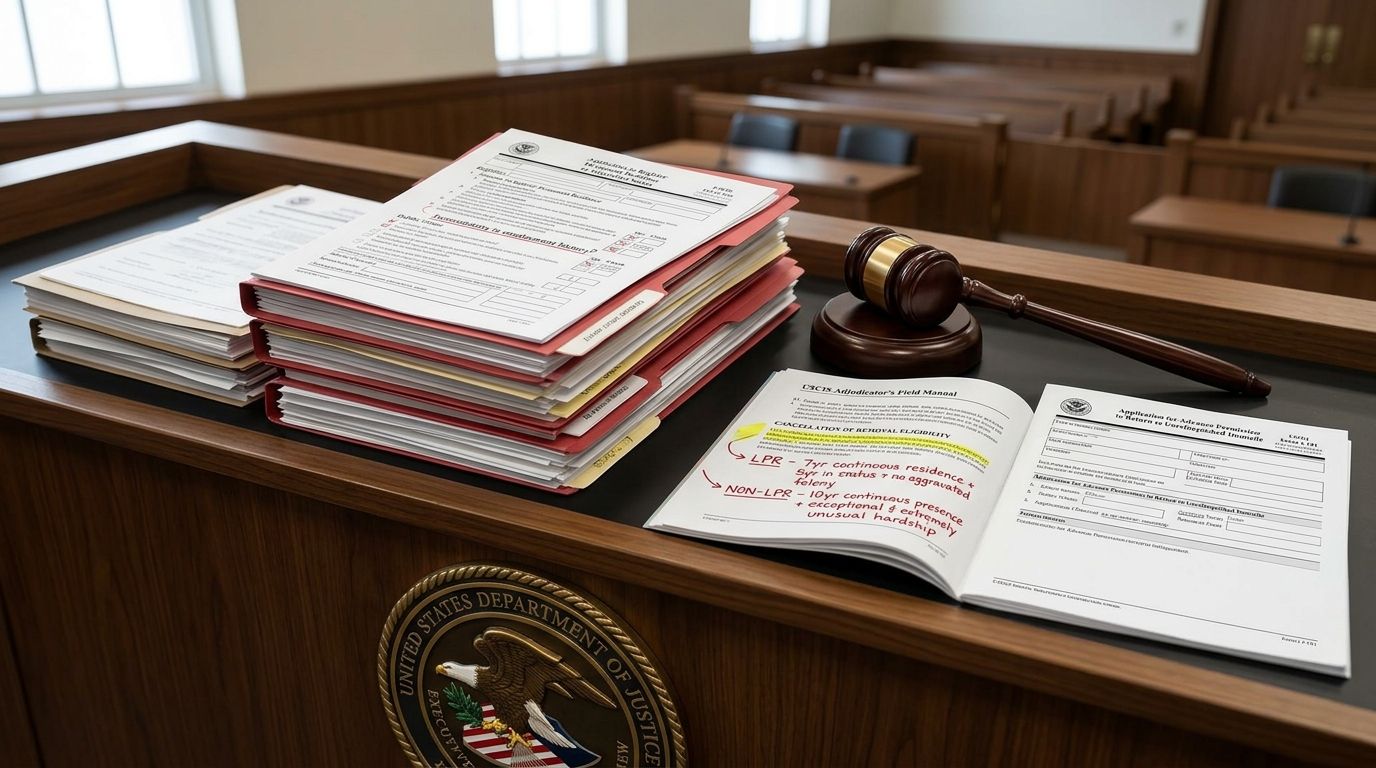
Green card holders can be placed in removal proceedings for certain criminal convictions. EOIR Form 42A cancellation of removal is one of the only options available, and the requirements are strict. Here is what you need to know.
By Arzoo Connor May 5, 2026
If a notario, paralegal, or family friend filed your immigration application and you got a letter from USCIS, here is what you need to know and what to do before the deadline passes.
By Arzoo Connor April 22, 2026
I want to tell you about a case that still sits with me. I am going to protect my client's identity because her safety matters more than any story I could tell. But I am sharing this because there are women out there right now in situations just like hers, and most of them believe no one can help them. I want them to know that is not true. Where Her Story Started She came to this country years ago, hoping for a better life. She had already been through more than most people face in a lifetime. Married at the young age of 15 in her home country, she had three children. Two of them have autism and require extra support every single day. The youngest was extremely close to his father, who passed away. After her husband died, she was devastated. She was raising three children alone, two of them with significant needs, and she was grieving deeply. It was in that vulnerable place that she met someone new. He presented himself as a support system. He pursued her. What she did not know was that he was manipulating her from the start. She became pregnant. They had a child together. And then, once that baby arrived, everything changed. He cheated on her. He became verbally and physically abusive. She tried to leave him. On the night she finally attempted to end the relationship, he called the police and told them a story that was not true. He presented himself as the victim. He was calm, articulate, and looked like a devoted father. She was the one who ended up being detained. Because she was not in the country lawfully, that night did not end with her going home to her children. It ended with her in immigration detention. What Nobody Told Her Here is something most people do not know, including many immigration attorneys. You do not have to be in the country legally to be protected under the Violence Against Women Act. VAWA exists specifically for situations like hers. It was designed to protect immigrant survivors of domestic violence, sexual assault, and abuse, including people who are undocumented, because Congress understood that abusers frequently use immigration status as a weapon. They threaten to call the police. They threaten deportation. They use their partner's fear of the system to keep them trapped. That is exactly what happened here. And it is why I took this case. What the Case Actually Looked Like I want to be honest about something. This was not a clean, simple case with months to prepare. I had two weeks. Two weeks to gather evidence, work through the domestic violence charges that had been filed against her the night she tried to leave, coordinate with a criminal attorney to have those charges addressed, locate witnesses, and build a full immigration trial case from scratch. Then I walked into that immigration courtroom and the judge gave me 60 minutes. 60 minutes to present an entire VAWA defense, put four witnesses on the stand, and ask a judge to release a mother back to her children. 60 minutes. I am not telling you this so you feel sorry for me. I am telling you this so you understand what these cases actually look like. The people who end up in this situation rarely have time on their side. The system does not slow down because the facts are complicated. You either show up ready or your client loses. What We Had to Prove A VAWA defense in immigration court requires showing several things. You have to establish that abuse occurred. You have to show that the person facing deportation was the victim, not the perpetrator. And you have to do all of this against someone who, in this case, had already successfully convinced law enforcement, prosecutors, and other attorneys that he was the one who had been wronged. He was good at it. I will give him that. My job was to show who she actually was. A mother. A woman who had already survived an enormous amount of loss before this man ever entered her picture. A person who had done nothing wrong except trust someone who exploited that trust at the worst possible moment in her life. We worked with a criminal attorney to address the charges that had been filed against her. Getting those handled was critical to building the immigration case. This is something I see all the time -- a criminal charge that looks minor on its face becomes the thing that closes every immigration door. You cannot ignore one side of a case and expect the other side to succeed. Then we built the VAWA case. Witness by witness. Document by document. All of it pulled together in two weeks. What Happened in That Courtroom I put four witnesses on in 60 minutes. I presented evidence of abuse. I told her story clearly and completely and I let the facts speak. The judge ruled in her favor. She went home to her children. I am not going to pretend that every case ends this way. They do not. I have lost cases that I believed in completely, and those losses follow you. But this one ended the way it should have ended, and I think about it when cases feel impossible. What I Want You to Take From This If you are a woman in an abusive situation and you are afraid that your immigration status means you have no options, please read this carefully. Your status does not disqualify you from protection. It does not mean you have to stay with someone who is hurting you to avoid deportation. It does not mean the courts will automatically side with a citizen or a person with papers over you. There are legal tools designed specifically for your situation. VAWA is one of them. The U-Visa is another. What determines whether you can use them is not your immigration status. It is the facts of what happened to you and whether you have an attorney who knows how to present them. What I would also say is this: if you are in an abusive relationship and your partner has ever threatened to call immigration on you, or has used your status to control you, that threat itself is evidence of abuse. Document it. Write it down. Tell someone you trust. And call an attorney before anything is filed. Before you accept any plea deal. Before you sign anything. The moment criminal charges or immigration proceedings begin, the clock starts moving, and in this world it moves fast. A Note on VAWA and the U-Visa People often ask me what the difference is between these two forms of relief. The short answer is this, VAWA is for survivors whose abuser is a U.S. citizen or lawful permanent resident, and the relationship must be a qualifying one -- spouse, parent, or child. It allows you to petition for immigration status on your own, without involving your abuser in the process at all. The U-Visa applies to a broader range of situations. It covers survivors of many types of crimes, not only domestic violence, and does not require the abuser to have any particular immigration status. It does require that you cooperated with law enforcement in some way during the investigation. In some cases, a person may qualify for both. In others, only one applies. The only way to know which path is right for your situation is to sit down with an attorney and go through the facts. If you are in a situation like the one I described above, please do not wait. For Attorneys Reading This If you are a criminal defense attorney with a noncitizen client, please do not finalize any plea without consulting an immigration attorney first. A disposition that looks clean on the criminal side can permanently close immigration doors. This happens constantly and it is almost always preventable. I work with criminal attorneys on cases like this regularly. Call me before you advise your client to accept anything. Attorney Arzoo Connor is the founder of ARC Legal Services in Fort Worth, Texas. She practices immigration law and estate planning and works with clients across the country. She is an immigrant herself and a veteran of the U.S. military. Her entire team has personally navigated the immigration process. ARC Legal Services: 469-200-0158 Consultations are $50. Same-day response is standard. If you or someone you know is experiencing domestic violence, the National Domestic Violence Hotline is available 24 hours a day at 1-800-799-7233 or thehotline.org.