

What Is a Living Trust and Do You Need One in Texas?

Arzoo Connor • November 13, 2026

A living trust in Texas is a legal document that transfers your assets into a trust during your lifetime, allows you to continue using and controlling those assets as the trustee, and then passes them to your beneficiaries after your death without going through the Texas probate process. Whether you need one depends on what you own, how your family is structured, and how much complexity you want to leave behind for the people you care about.


I handle estate planning in Texas and I work with a lot of families who have questions about living trusts. The question I get most often is whether a living trust is better than a will. The honest answer is that it depends on your situation — sometimes it is, sometimes it is not, and sometimes you need both.


What a living trust actually does

When you create a living trust, you transfer ownership of your assets — your house, your bank accounts, your investments — into the trust. You name yourself as the trustee, so you continue to manage everything exactly as you did before. Nothing changes day to day. You can still sell assets, change accounts, make any decisions you want.


When you die, the successor trustee you named — a family member or trusted person — steps in and distributes your assets to your beneficiaries according to the terms of the trust. This happens without going to probate court. That is the primary reason people choose a living trust over a will in Texas: avoiding probate.


What probate in Texas actually looks like

Probate is the court process that validates a will and supervises the distribution of assets after someone dies. Texas has a simplified probate process compared to many other states — it is called independent administration and in most cases it is not as burdensome as probate in states like California or Florida. Texas also has a muniment of title procedure for very simple estates.


For some families, Texas probate is straightforward enough that the cost and time savings of a living trust are not significant. For other families — particularly those with property in multiple states, significant assets, privacy concerns, or blended families with complicated beneficiary situations — avoiding probate through a living trust is worth the additional cost to set it up.


Real estate in another state is one of the clearest cases where a living trust makes sense. If you own property in Texas and property in another state, your estate would have to go through probate in both states after you die without a trust. Putting both properties into a living trust avoids that.


Why living trusts matter specifically for immigrant families in Texas

For immigrant families, living trusts carry specific advantages that go beyond the probate question.

If you have family members in other countries who are beneficiaries of your estate, transferring assets through a trust is typically faster and cleaner than going through a probate court that may have limited experience with international beneficiaries. The trust document controls the distribution. No court involved.


If your immigration status or your spouse's immigration status means your estate has more complex tax implications — which I have written about separately in the context of the Qualified Domestic Trust — your estate plan needs to be structured carefully, and a living trust is often part of that structure.


If you are concerned about what happens to your assets if you become incapacitated — not just when you die, but if you are detained, or if you have a medical situation — the trust structure with a successor trustee means someone can step in and manage your assets without going to court to establish a guardianship or conservatorship.


When a will may be sufficient

If you own property only in Texas, your estate is relatively straightforward, your beneficiaries are adults in the United States with no complications, and your total assets are modest, Texas's simplified probate process may be manageable enough that a will is sufficient for your situation.


A will is also less expensive to create upfront than a living trust. The tradeoff is the probate process after your death, which involves court fees, attorney fees, and time. Whether the upfront cost of a trust is worth it depends on the value and complexity of what you own.


The other thing to know is that a living trust works best when it is fully funded — meaning all your assets have actually been transferred into the trust. A trust that exists on paper but was never funded does not avoid probate for the assets that were not transferred. People who create trusts and then forget to retitle their assets sometimes leave their families with a trust and a probate proceeding.


What to do if you are not sure what you need

A consultation at our office in Fort Worth will tell you exactly which approach makes sense for your assets, your family structure, and your specific situation. Estate planning is not one size fits all and the conversation matters.


Attorney Arzoo Connor

ARC Legal Services | Fort Worth, TX | Hablamos Español

469-200-0158 | arclawoffice.com


This post is for general informational purposes only and is not legal advice. Every immigration case is different. Please consult a qualified attorney about your individual situation.

By Arzoo Connor • November 5, 2026
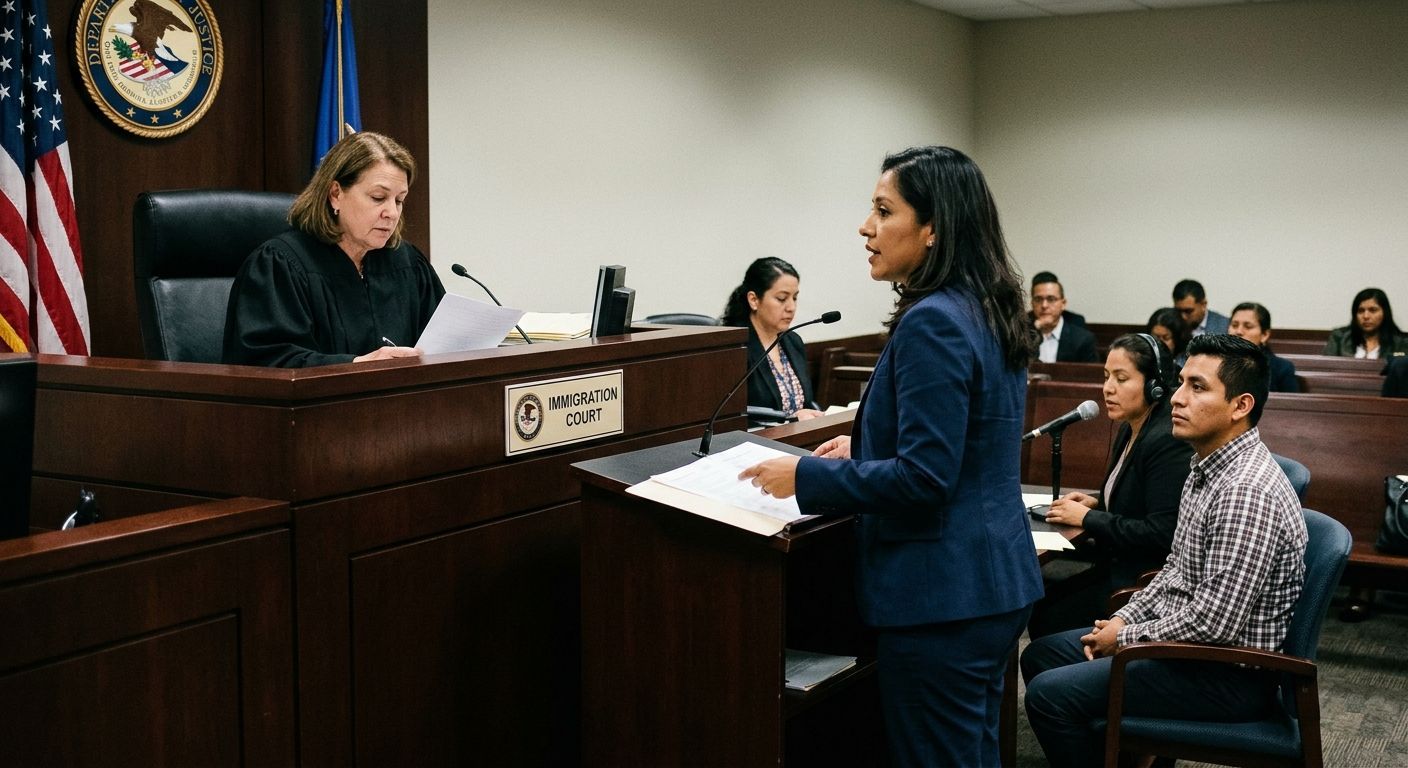
An immigration bond hearing is a proceeding in immigration court where a judge decides whether a person who has been detained by ICE can be released while their immigration case proceeds, and if so, how much the bond will be. If someone you love was just detained, a bond hearing is likely the most urgent thing on your list right now. Here is how it works and what matters. I handle detention and bond cases at my office in Fort Worth. The calls I get from families when someone is detained are almost always the same: they do not know where the person is, they do not know what the process is, and they do not know how to help. This is what you need to know. How ICE detention works When ICE detains someone in North Texas, they’re usually processed first at the Dallas ICE Field Office and then moved to a detention center. The closest is the Prairieland Detention Center in Alvarado, about 40 miles south of Dallas. Other facilities under the Dallas Field Office are much farther west: the Bluebonnet Detention Facility in Anson (about 200 miles from Dallas), the Rolling Plains Detention Center in Haskell, and the Eden Detention Center in Eden. Depending on bed space, people may also be sent to facilities elsewhere in Texas, such as the T. Don Hutto center in Taylor near Austin or the South Texas ICE Processing Center in Pearsall south of San Antonio, or out of state to Louisiana and beyond. Parents detained with their children are typically held at the Dilley Immigration Processing Center in South Texas, the country’s only family detention center. Transfers often happen with little notice and can put people hundreds of miles from home, which makes it much harder for families and lawyers to stay in contact. ICE has authority to detain someone it believes is in the country unlawfully, someone in removal proceedings, or someone it considers a flight risk or a danger to the community. Not everyone who is detained has the same legal situation — some people are subject to mandatory detention under immigration law because of certain criminal convictions, and those individuals cannot be released on bond regardless of what a judge decides. What a bond hearing is and how to request one A bond hearing is a separate proceeding from the removal case itself. It is focused specifically on whether the detained person should be released and at what bond amount. To request a bond hearing, the detained person or their attorney files a request with the immigration court. There is no automatic bond hearing — you have to ask for one. Immigration judges look at two main things in a bond hearing: whether the person is a danger to the community and whether they are a flight risk. For the danger question, any criminal history is relevant. For the flight risk question, judges look at community ties — how long the person has been in the area, whether they have family here, whether they have stable employment, whether they have a history of compliance with prior court dates. Strong community ties — a spouse, children, a home, years of employment, no prior removal history, no criminal record — tend to support a lower bond amount or release on supervision. A prior removal order, a criminal record, or a pattern of not appearing for court dates makes the bond argument harder. What bond amounts look like Immigration bonds are typically set between $1,500 and $25,000, though they can go higher in cases involving criminal history or prior removals. The bond amount has to be paid to ICE before the person is released. Immigration bonds work through immigration bond companies that charge a non-refundable fee, usually around 15 to 20 percent of the total bond amount. If the bond is paid and the person is released, they still have an immigration case pending. Release on bond does not resolve the underlying case. It just means the person can be home while the case is handled in court rather than detained throughout the process. If a judge sets the bond too high If a judge sets a bond amount that the family cannot pay, the decision can be appealed to the Board of Immigration Appeals. An appeal takes time and the detained person remains in custody during the appeal, so it is a calculation that has to be made carefully. In some cases it makes more sense to pay a high bond and fight the underlying case from home rather than appeal the bond amount. Mandatory detention — when a bond hearing may not help Some people in immigration detention are subject to mandatory detention under federal law. This includes people with certain criminal convictions — aggravated felonies, drug offenses above a certain level, crimes of violence. If someone falls into a mandatory detention category, a judge cannot set a bond. The legal fight in that situation is about the underlying removal case or about challenging whether mandatory detention applies. This is one of the first things I assess when a family calls me about a detained loved one. Whether a bond hearing is possible — and how strong the bond arguments are — depends on the person's immigration history and criminal record. Getting that analysis right early saves a lot of time and money. What to do right now if someone you know was detained Call an immigration attorney as quickly as possible. The first 24 to 48 hours matter because the detained person needs to understand their rights, needs to know not to sign any voluntary departure or removal paperwork without legal advice, and because locating the person in the detention system takes time. ICE has an online detainee locator tool but it is not always current. Do not panic. Detention is not the end of the case. People fight their immigration cases from detention and win. People are released on bond and fight their cases from home. The outcome depends on the facts of the case and the quality of the representation. If someone you know was detained in Fort Worth, Dallas, or anywhere in the DFW area, even nationwide, call us immediately. We will locate them, assess whether a bond hearing is available, and tell you honestly what the options are. Attorney Arzoo Connor ARC Legal Services | Fort Worth, TX | Hablamos Español 469-200-0158 | arclawoffice.com This post is for general informational purposes only and is not legal advice. Every immigration case is different. Please consult a qualified attorney about your individual situation.
By Arzoo Connor • November 3, 2026
An inadmissibility waiver is a formal legal request asking the government to overlook a specific ground that would otherwise bar you from obtaining a visa or green card.
By Arzoo Connor • October 30, 2026
Whether you can get a green card after entering the United States without inspection depends on several factors — whether you have a qualifying family member, how long you have been here, whether you have any prior removal orders, and your specific immigration history. There is no single yes or no answer. But there are paths that exist for some people in this situation, and there are specific reasons why others cannot use them, and understanding which category you are in is the most important thing you can do right now. This is the question I hear most in my office in Fort Worth. People who have been here for ten, fifteen, twenty years. People who have US citizen children, US citizen spouses. People who built lives here and want to know whether there is a legal path forward. Here is the honest answer. What 'entered without inspection' means and why it matters Entering without inspection means crossing into the United States without going through an official port of entry or without being admitted by an immigration officer. No visa. No stamp. Just crossing. This matters for green card purposes because the standard path to a green card — called adjustment of status — generally requires that you were inspected and admitted or paroled into the United States. If you entered without inspection, you were not admitted. That creates a barrier to adjusting status inside the country that people who entered with a visa and overstayed do not face in the same way. When a path to a green card may exist despite entering without inspection The most common situation where a path exists is through a provision called 245(i). This is a law that allows certain people who entered without inspection — or who have other technical bars to adjustment of status — to still apply for a green card inside the United States, as long as they had a family petition or labor certification filed on their behalf before April 30, 2001, and they pay a penalty fee. If you have a family member who filed for you before that date, this may apply to you. The date cutoff is firm and there is no exception to it. Another situation is parole in place for military families. If you are an immediate family member — spouse, child, or parent — of someone on active duty in the US military or a veteran, you may be eligible for parole in place, which gives you a form of admission that then allows you to apply for adjustment of status. This is a specific and limited exception, but it is a real one. There is also consular processing — leaving the United States and applying for an immigrant visa at a US consulate abroad. This is sometimes an option, but it requires understanding the unlawful presence bars before you go. If you have been in the United States unlawfully for more than 180 days and you leave, you trigger a bar on returning. More than one year unlawfully, and it is a ten-year bar. Whether a waiver of that bar is available depends on your qualifying relatives and the hardship your absence would cause them. When there is no direct path currently available If you entered without inspection, you do not have 245(i) eligibility, you do not have a military family connection, and your only option would require leaving the country and triggering an unlawful presence bar — and you do not have qualifying relatives who could support a hardship waiver — then there may not be a straightforward path to a green card right now. That is a hard answer to hear and I give it plainly because the alternative — spending money on an application that does not succeed, or making decisions about leaving the country without understanding the consequences — is worse. Some people in this situation have other options: cancellation of removal if they end up in immigration court, U visa if they have been a victim of a qualifying crime, VAWA if they have been abused by a US citizen or LPR spouse or parent. Those are separate conversations worth having. Why you need an attorney to assess your specific situation The analysis of whether a path exists depends on facts that are specific to your case. When exactly you entered. Whether you have had any prior immigration court proceedings. Whether anyone has ever filed any petition for you. Whether you have any criminal history. Whether you have qualifying family members and what their status is. I have sat across from people who came in and were certain they had no options and found a path they did not know existed. I have also sat across from people who were certain they qualified for something and had to tell them the specific facts of their situation meant they did not. There is no substitute for having someone look at your actual file. A consultation will tell you honestly where you stand and what, if anything, can be done. Call us. Attorney Arzoo Connor ARC Legal Services | Fort Worth, TX | Hablamos Español 469-200-0158 | arclawoffice.com This post is for general informational purposes only and is not legal advice. Every immigration case is different. Please consult a qualified attorney about your individual situation.

By Arzoo Connor • October 30, 2026
ICE can arrest and initiate removal proceedings against a lawful permanent resident.
By Arzoo Connor • October 27, 2026
As of October 23, 2026, there is no path to bond for people who entered the United States without inspection and are detained in Texas, Louisiana and Mississippi.
By Arzoo Connor • October 20, 2026
Someone Showed Me A Will Last Week That They Made With ChatGPT. It Had The Right Words In All The Right Places. It Also Would Have Been Invalid In Texas.
By Arzoo Connor • October 14, 2026
DACA renewals are still being processed as of October 2026
By Arzoo Connor • September 24, 2026
USCIS is using artificial intelligence to screen social media accounts as part of immigration case review
By Arzoo Connor • September 24, 2026
Airports in the United States are federal jurisdiction.
By Arzoo Connor • September 15, 2026
Cancellation of removal is a form of relief in immigration court that allows certain people who are in removal proceedings to avoid deportation and, in some cases, receive a green card.